עברית | English | Русский     
 
למטייל
טיולים בישראל
Emergency phones  
 077-333-4555
Tour Guides
Avraham Tuval - Experience-Israel with AvrahamTours.

Avraham is a 'Tzabar', an High-Technology professional, an avid traveler, a certified Tour Guide in Hebrew and English, and has a wealth of experience guiding and operating tours in Israel for both groups and individuals. AvrahamTours provides an exciting and enjoyable, moving and enriching experience, thanks to Avraham's extensive knowledge on the subject. A love of the country and its people is a vital ingredient for a successful tour and Avraham has both.
Avraham Tuval
Avi Farjoun - The more we'll get to know her - The more we'll fall in love with her.

This is our Israel - The holyland.  So small, but with so many faces - fascinating, intriguing and diverse.
I invite you to get to know Israel and its trails, through guided walks or with a 4WD vehicle.

We will focus on the great combination between Israel's awesome nature, and the glorious history and magnificent stories this land has to tell.
Avi Farjoun
Shai Margalit - My name is Shai Margalit and I am a licensed tour guide in Israel. I specialize in the Jerusalem area but do not rule out  other amazing regions like the Negev and the Galil.

I offer wonderful views and vistas, motorized, walking and bicycling tours and a friendly informative atmosphere.It would be my pleasure to accommodate your touring needs.
Shai Margalit
Atar Zehavi - Atar Zehavi- licensed tour guide. I specialize in jeep and hiking trips.
I have a desert vehicle- Land Rover Defender, which is allowed carry to passengers where other vehicles cannot go.
The trips I lead focus on direct contact with nature, and focus on Geology, Plants and Animals, History and Environment Protection.
Atar Zehavi
Full Tour guides list
Near By Tracks
Ein Akev and Ma’ale Divshon (Rating: 9.55)
Settlement in the Nitzana Area (Rating: 8.4)
Yeruham and the Sternbergias (Rating: 8.33)
The Best of Makhtesh Ramon (Rating: 8.88)
Borot Lutz (Rating: 8.29)
Hiking between Makhtesh Ramon and the Arava (Rating: 9.48)
Mamshit – Agriculture City in the Desert (Rating: 8)
The Makhtesh Katan (Rating: 9.22)
Har Masor (Rating: 9.54)
 
Track General Nature In The Track Track Comments
Shivta – a Nabatean City in the Heart of the Deser
Duration:  Half a Day
Coordinates:  (1144, 10374) / (34.6284, 30.8819)
Topographic Map Number:  16 - Negev Desert Hights
Seasons:  Fall, Spring, Summer, Winter
Properties:  Round Trip, For Families, Romantic, Suitable for Bicycle
Difficulty: Easy     Length (KM): 2     Rating: 8.75
Moon Calendar:  Moon Rise & Set this month
The track was last updated at:  21/4/2012

Region:  Northen Negev (Desert)
Regional Map Northen Negev  (Desert)
strName Map of The Track Map of The Track
The track area in Google Maps The track area in Google Maps
Topographic Map Topographic Map
Map of The Track
Printing

The page in Hebrew: 
The page in Russian: 
שבטה - עיר נבטית בלב המדבר
Шивта – набатейский город в сердце пустыни


For some people visiting an archeological site connotes wasting of time – you see few stones, read 2-3 information signs and that's it. Well, you can be assured that you’ll change your attitude in Shivta. Shivta is a Nabatean city in the north of the Negev and it is one of the most impressive archeological sites in Israel, in the light of its size and state of preservation. You can spend hours there wandering around, without any dull moment. Because of its vast and massive building archeologists call it a real ancient city.

This itinerary opens with some historical background about Shivta and then it details a recommended route inside town that takes two hours for completion and suitable for the whole family.

How to Get There

Drive via Route 40 in the direction of Beersheba and Telalim Junction. After passing this junction continue straight and westward via Route 211 toward Nitzana. Drive for about 15minutes until a signpost that points left towards Shivta. Turn and drive for about 3 km [1.8 miles], pass an army base and drive for an additional 2 km [1.2 miles] until the car parking of Shivta National Park. Entrance hours: weekdays 8:00 AM to 5:00 PM; Fridays 8:00 AM to 3:00 PM.

The Nabateans

The Nabateans did not leave behind them any written sources about their history, and information about them comes mostly from Greek and Roman sources. Researchers assume that the Nabateans were a people of Arab origins that migrated to the area of South Jordan and Negev around 300 BC. They lived bounded by changeable borders due to conquests and contra-conquests, until they were formed into a nation at the 3 or 4 Century BC and kept their national identity until the 3rd Century AD: however, their cities continued to be populated until the 10th Century. During the 3rd - 4th Centuries AD the Nabateans had converted into Christianity and built big churches in all of their cities. Their fate as a nation is not yet clear, but it is thought that they became assimilated among other peoples of the area, and that gradually they abandoned their cities.

The livelihood of the Nabateans was based on two main sources: agriculture and commerce. They developed an excellent desert agriculture which was sufficient for supplying all of their needs. Simultaneously, they were adroit merchants, and maintained trading routes that stretched over from the Arabian Peninsula to Mediterranean Basin. Their caravans, loaded with medical herbs and incenses, crossed those vast wastelands. They had to provide for the needs of these commercial caravans, so they also established a net of guarded posts for lodging, which were distanced from each other by a one-day-walk. In addition, the Nabateans built big cities, and Petra their principal one, was built in South-Jordan. This city – Shivta – is the topic of this current itinerary.

Shivta

Shivta is located 340 meters above sea level in the northwest slopes of Har Hanegev [the Negev Heights]. Being established around Christ's birth, the city saw years of prosperity during the 3rd - 4th centuries AD when its residents became involved in trade and raising and trading in horses, and in the framework of the commercial deployment of other Nabatean cities in the Negev.

During the middle of the 4th Century AD, most the local residents were converted into Christianity and two churches were built in the city. During the 8th or 9th Centuries AD, a mosque was erected next to one of the churches, an evidence for Muslim population at Shivta. In the 10th century, it was totally abandoned and only in 1870 it was rediscovered. Among the many remnants of the city some may be of special interest:

The Sites of the City

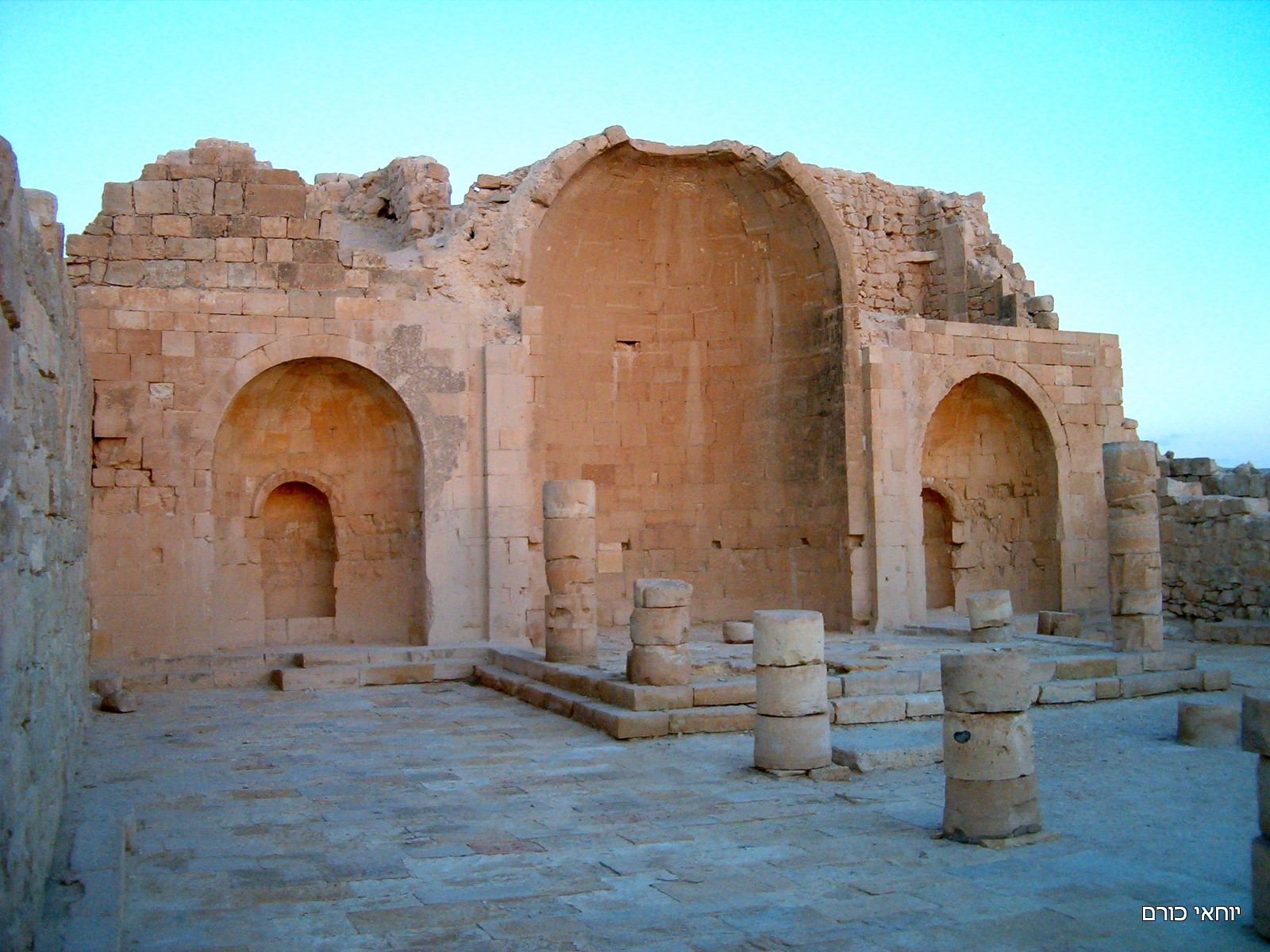
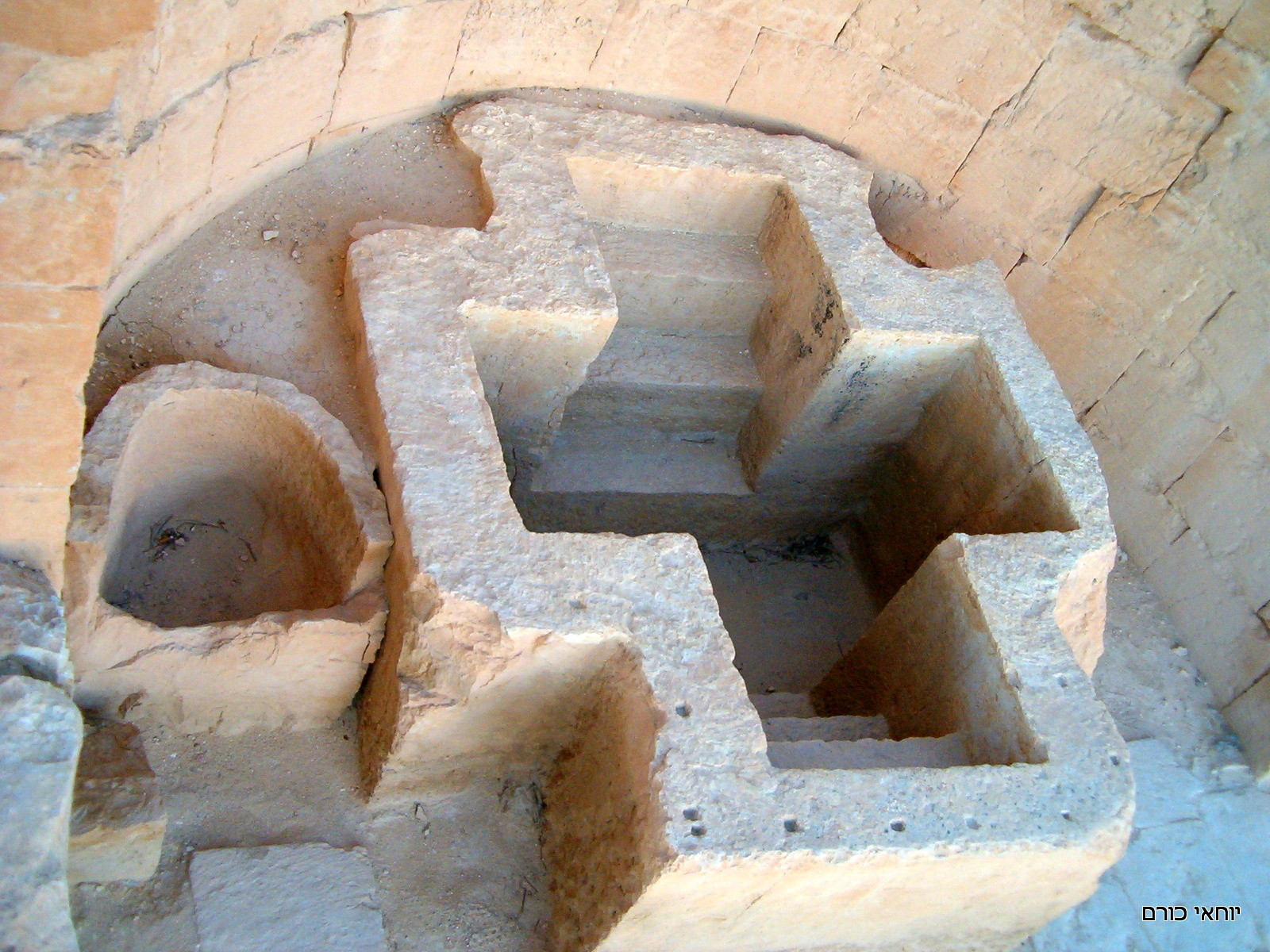
The southern church is located near the big pool, the social-economic-religious center of the city. It was built during the 4th Century AD. Being positioned in a central spot at the city and due to the many buildings that surrounded it, the builders tried to keep symmetry relations between its various part but encountered with some difficulties, and thus it has a somewhat deformed shape.  During the 6th Century, on both sides of its apsis, or the big niche that houses the altar, two additional minor apsides were supplemented, with cases that contained relics of saints. Note the big baptisterium in the north side of the nave of the church, which can be easily traced by its cross-shaped baptism basin. Its size indicates that it was used not only for baptizing young children like in regular Christian communities of our days, but mainly for baptizing adults, a detail that aligns with the fact that many Nabateans were introduced to Christianity only during their adulthood.

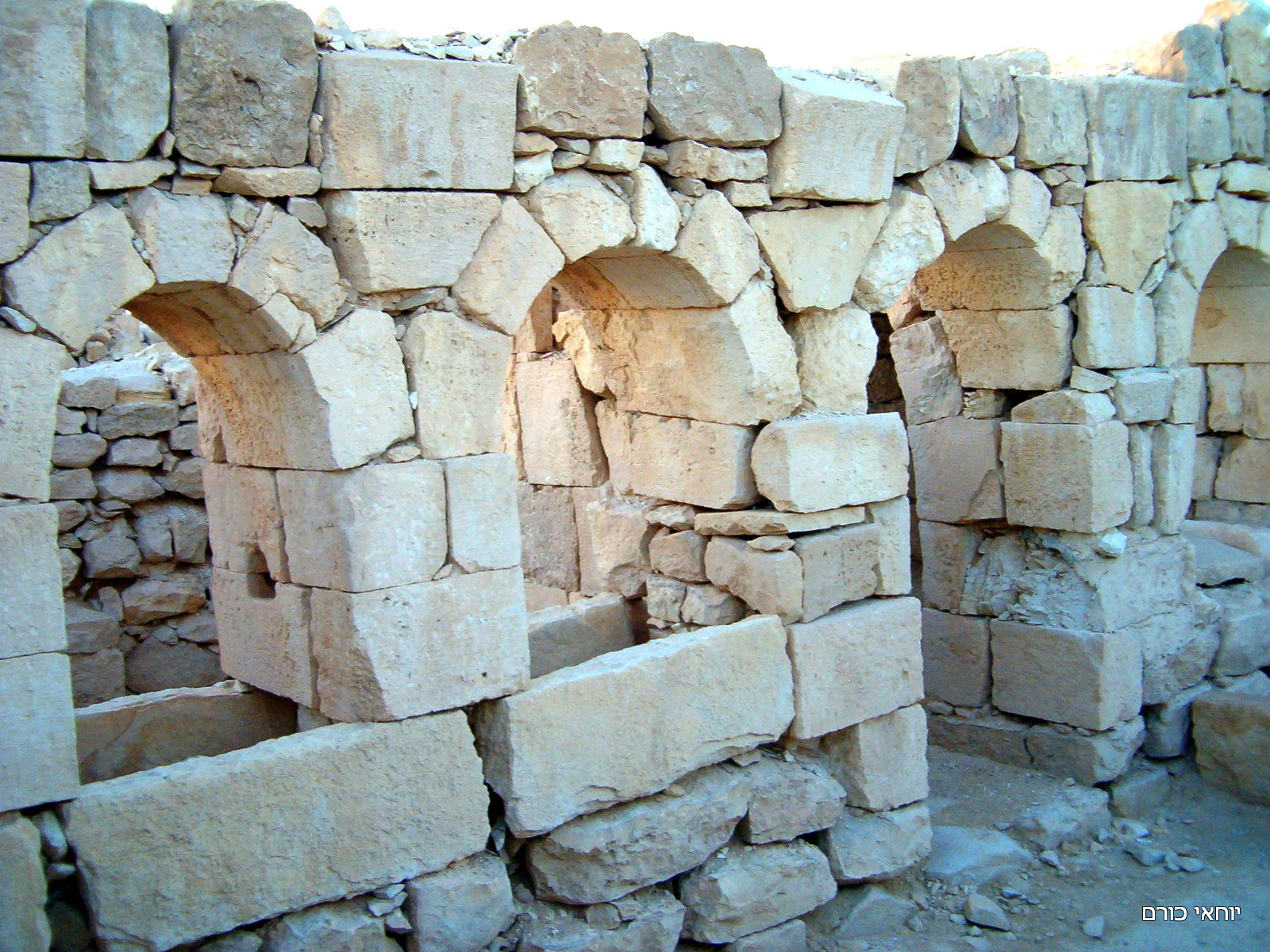
The Governor's Houseis a two-story building, among the very few such buildings that have survived in Israel from the Byzantine period. Not only that the arches of the first floor and its roofing was preserved but also most of its upper floor.

The Wine Presswhich is juxtaposed to the plaza is unique because unlike wine presses at other Nabatean cities, this one has no cells for storing the grapes before the process of treading upon the grapes. Otherwise, this wine press is designed just like other wine presses, mainly its treading pit.

The Northern Churchis near the central plaza at the north of the city, next to the entrance to the city which is very elegant. The central part of the church, the atrium, is so vast that it offered enough place for an audience which was by far bigger than the actual number of the citizens at the time when the population of the city reached its pick. West to the atrium and arrayed in two floors, there are cells which were used by the monks who supply services in the church. The column in the central space of the atrium was used as a residence for a pillar saint (stylite) who chose his secluded hermitage on top of this column and lived thus for many years, a religious phenomenon which is known in the Middle East, mostly in Syria. Nitzana papyruses mention the St Sergius feast which donors mostly of Shivta residences used to support it, and hence there is a solid ground to believe that that St. Sergius was the monk who used to live on this pillar. Two burial plots were found at the church, one in the atrium that served commonalties (and among them a 7-year-old child, the son of the governor of the east Byzantine provinces who was buried here in 612), and the other for clerks of the church (12 inscriptions were found there, including one which was made in memory of the monk Sergius of Paran.)

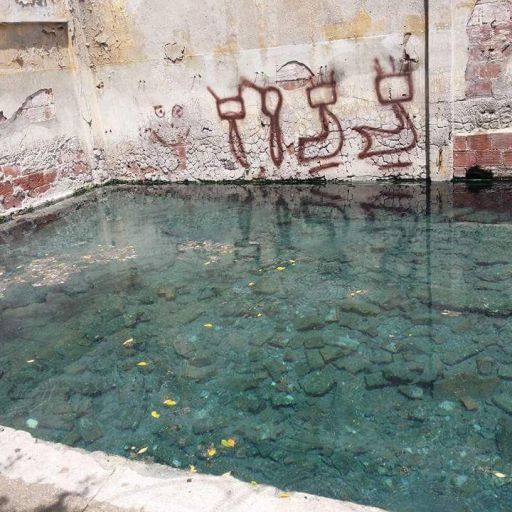
Agriculture and Water. The city itself has many holes for rainfall harvesting which were fed by the drainage system of the city that collected any drop of runoff rainwater. Being a rural center, many remains of desert agriculture can be found in the periphery of the city which is basically consists from a system of small dams that cross the waterbeds of its local canyons. Remnants of wine presses, including treading pits for preparing wine, and many other agricultural facilities, also testify for agriculture produce that was used for trade. A stable with water through which was found in one of the impressive building at the city entrance points to the fact that horses and other beasts of burden were used for riding and carrying carriages.

From the Northern Church, continue to a beautiful Orchard through a circular trail.

Please keep the place clean. Please do not either climb on the buildings or stray from the marked footpaths.

Lodging in Shivta

It is most recommended to lodge at Dina and Ami’s who established an agricultural ranch and reconstruct the Nabatean way of life. They maintain the site and offer guided tours in site and few rooms for lodging at their ranch; please coordinate in advance. Meals for singles or groups are also available. There is an impressive little zoo at their place, a pleasant orchard and more things like that. From personal acquaintance, the couple is excellent and the experience is authentic and rewarding. Tel. 08-6550911, 0507-383802 or through their web site.

http://www.nabato.co.il/index3.htm


Other Nabatean cities in the area: Mamashit, , Nitzana, Avdat.

Regional Map

Show on Large map with additional information Show on Large map with additional information  Show on Large map with additional information


Map Layers:
Tracks Tracks

Tiuli Trips, hikes, tourism and Travel in Israel

Travel safely, take a map with you, keep it clean and above all, enjoy your trip and travel.

Yochai Corem - Contact 


Print Print  | Map  | Recommend to Others Recommend to Others

Comments from Tiuli website

There are total 0 Track Comments Add Comment Open all

 
Share
A church in Shivta
A church in Shivta

Photo By: Yochai Corem
A church in Shivta


Baptistery
Baptistery

Photo By: Yochai Corem
Baptistery


Big Church
Big Church

Photo By: Yochai Corem
Big Church


Old wine-press
Old wine-press

Photo By: Yochai Corem
Old wine-press


Stable in Shivta
Stable in Shivta

Photo By: Yochai Corem
Stable in Shivta


Water hole for storage

Photo By: Yochai Corem
Water hole for storage